Services · Roof Replacement
Roof Replacement in Castle Pines, CO
Full tear-off to the deck, built back to the 2021 IRC with the material your home and your HOA call for. Permits pulled from the right desk, whether that is the City of Castle Pines or Douglas County.
What’s included in a Castle Pines roof replacement
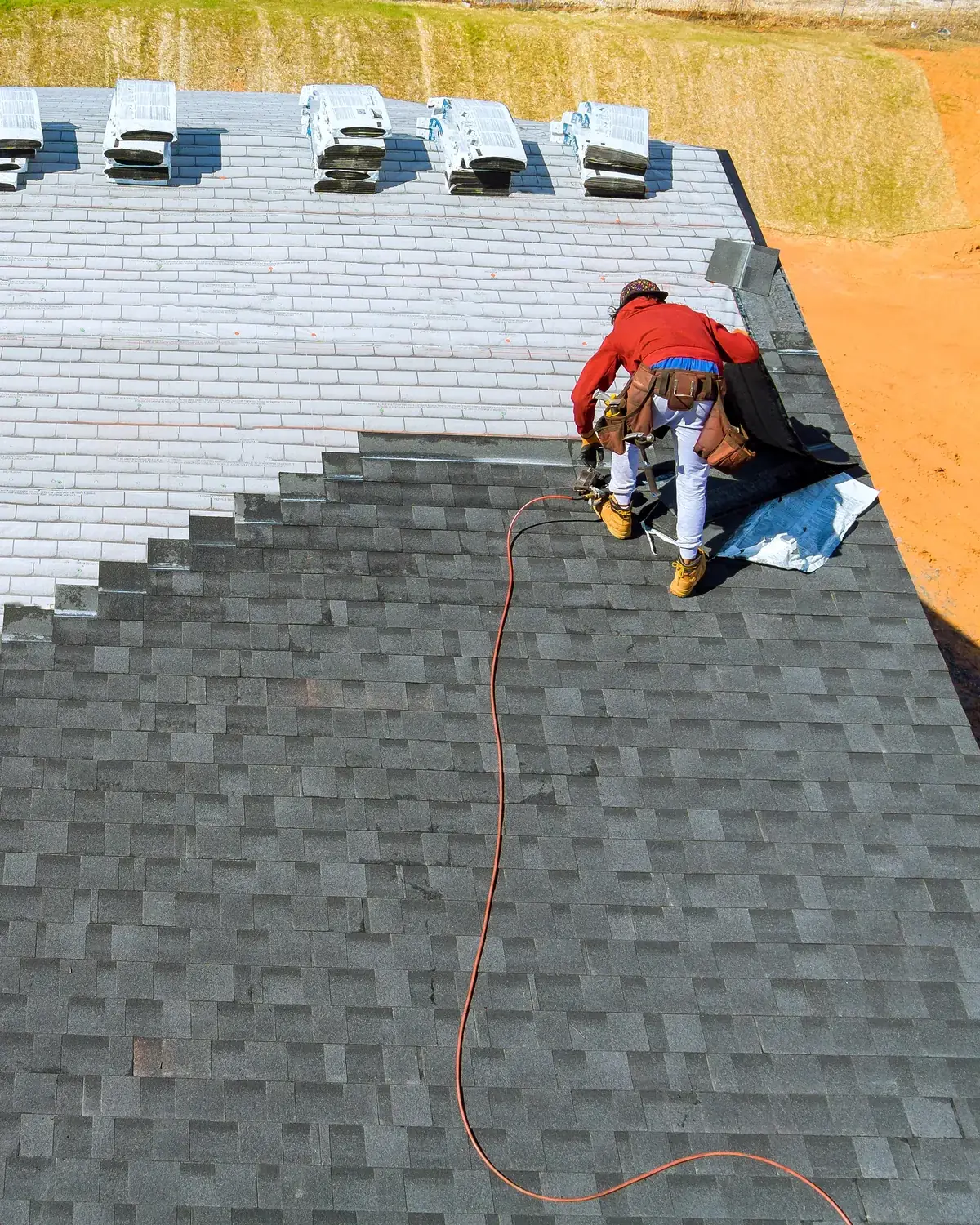
- Full tear-off to the deck, overlays are prohibited here
- Deck inspection; soft or rotted wood replaced before anything goes down
- Ice barrier, underlayment and drip edge to current code
- Class 4 shingle, tile, synthetic slate or standing seam options
- Permit, inspections and use tax itemized on the quote
- Site protection, magnet sweep and daily cleanup
- Manufacturer warranty registered; workmanship warranty in writing
What a roof replacement involves in Castle Pines, CO
A Castle Pines replacement is not the same job as one on the metro floor. At 6,368 feet the UV load is higher, the hail comes off the Palmer Divide, and the code that governs the build depends on which side of the city line you live on. Inside city limits, the City of Castle Pines issues a 1-Stop re-roof permit and requires the contractor to hold a city license. Behind the gate, the Village at Castle Pines is unincorporated Douglas County: county permit, county inspections, and the Village architectural review before a single square of material shows up.
Cost-wise, Denver-metro asphalt replacements typically run $10,000 to $22,000 with most homeowners landing between $14,000 and $18,000; tile, slate and metal run higher. Castle Pines homes trend large, so we quote from an actual on-roof inspection rather than a satellite guess. The quote itemizes the permit fee and the use tax, 3.75% city plus 1% county on half the project value inside city limits, so the number you sign is the number you pay.
If hail is part of the story, the replacement usually starts as an insurance claim. We document first, meet the adjuster on the roof, and scope the build to what the policy owes you, including Class 4 impact-rated upgrades many Colorado carriers discount.
Choosing a replacement material at 6,368 feet
Altitude narrows the field. UV load climbs with elevation, so the same shingle ages faster here than it does on the metro floor, and the Palmer Divide hail corridor punishes anything that cannot take an impact. That is why our default recommendation inside city limits is Class 4 impact-rated architectural shingle: it looks like what the neighborhood already wears, it shrugs off the hail sizes that total ordinary roofs, and many Colorado carriers return part of the premium every year for it. Behind the gate the conversation usually starts from a different shelf, because the Village architectural review favors tile, slate, copper and metal, and the estate stock carries them well. Class 4 synthetic slate is the quiet crossover pick: review-board looks, a UL 2218 lab rating, and a weight most structures carry without engineering work. Standing seam metal earns its place on knoll-top homes that take the wind first and shed snow onto walkways below. We quote the options side by side, with the insurance math attached, and let the roof and the review board settle it.
What tear-off day looks like on your property
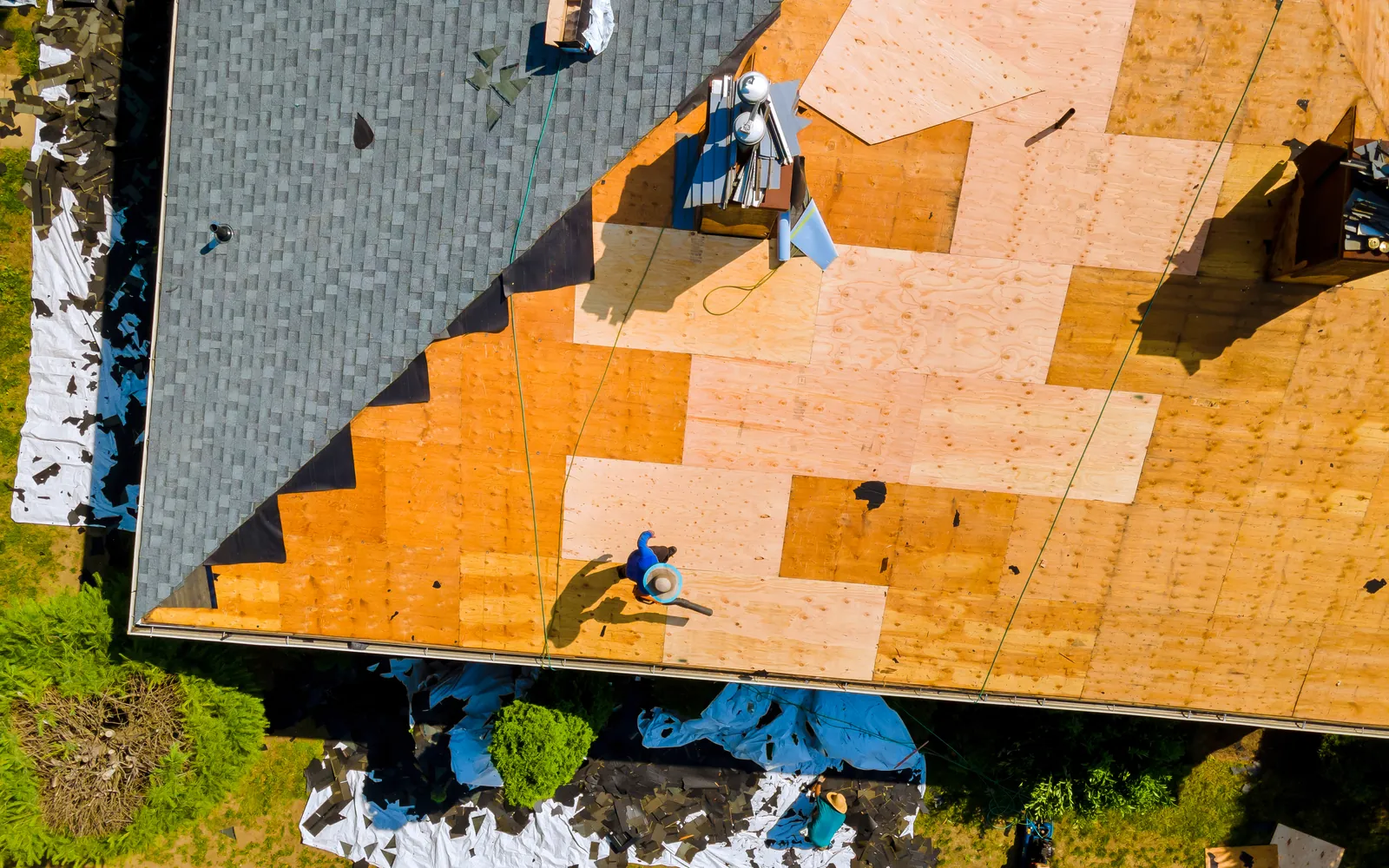
A full tear-off is loud, heavy and messier than the brochure photos admit, so the ground game gets planned before the first shingle moves. Dumpster placement is agreed in advance with plywood under the rollers where it meets the driveway. Landscaping inside the drip line gets tarped, and on lots where the ponderosas this town is named for stand close to the house, we rope crew paths so branches and beds survive the week. Cars come out of the garage before we start; nail-studded debris on a driveway is exactly where you do not want to find a tire. Inside, expect real noise from first light, and take fragile things off shelves, because tear-off shakes a house honestly. The crew runs magnetic sweepers across lawn, beds and driveway at the end of every day, not just the last one. Satellite dishes come off and get remounted with realignment flagged for your provider; solar arrays need a detach-and-reset coordinated with your installer, and that belongs in the scope up front, not discovered at 7 a.m. on demo day.
The two warranties on a new Castle Pines roof
Every replacement leaves you with two different promises, and conflating them is how homeowners get burned. The manufacturer’s material warranty covers the product, and it stays valid only when the roof is installed to spec: the listed underlayment, the fastening schedule, the ventilation the shingle was engineered for. That is why we register it for you at close-out instead of leaving a brochure on the counter. The workmanship warranty covers the installation itself and comes from us, in writing, with its term stated in the contract; a verbal “we stand behind our work” is worth the paper it is not printed on. One local caution: hail is generally excluded from both. Storm damage is insurance territory, which is exactly why the Class 4 decision and your wind-hail deductible matter more here than any warranty brochure, and why the close-out folder we hand you, permit, inspection record, registered warranties, photos, is built to be shown to an adjuster or a buyer years from now.
Ventilation and ice barrier: the details that make roofs last here
Two line items separate a roof that lasts at 6,368 feet from one that does not, and neither is glamorous. Balanced ventilation first: intake at the eaves matched to exhaust at the ridge keeps attic temperatures in range, which fights summer shingle-cooking from below and winter ice damming from above. We calculate net free vent area on every replacement rather than reusing whatever the last roof had, because many of these attics were tightened by two decades of remodels and nobody ever re-ran the math. Ice barrier second: membrane at the eaves, valleys and penetrations, lapped correctly with the drip edge, because sunny January afternoons melt snowpack that refreezes at the cold eave, and that cycle runs here dozens of times a winter. Both items are cheap while the roof is open and miserable to retrofit, which is exactly why they are in every scope we write and itemized where you can see them.
Timing a roof replacement on the Palmer Divide
Roofs get replaced here year-round, but the calendar has texture. Late spring through early fall offers the widest weather windows, and it is also hail season, which is why post-storm months stack schedules across the whole corridor. Shingle sealant strips want warm days to bond, so winter installs get hand-sealing attention at eaves and rakes rather than a shrug. If your roof is aging rather than storm-damaged, the quiet shoulder months usually mean faster starts, easier review-board scheduling on Village jobs, and better material availability than the post-corridor rush. And if a hail claim is paying for the roof, the policy’s claim window, not the season, sets the real deadline; we schedule around that first and say so in the plan. Duration expectations stay honest either way: one to three install days on most homes once material lands, longer on large tile and metal projects, with the sequence printed in the scope.
Roof replacement questions Castle Pines homeowners ask
How long does it take? Most single-family roofs are one to three days of installation once material lands; large tile and metal projects run longer and we say so in the scope. The permit and the final inspection bracket the work, and Village jobs add the architectural review ahead of everything. Can we stay home? Yes, most families do; plan calls and naps around real noise from first light. Should gutters happen at the same time? If they are due, yes. The crew is staged, drip-edge integration is cleaner, and hail claims that pay for a roof often owe for dented gutters anyway. Does the review board really have to approve first? Behind the gate, yes, material, color and profile, before anything is ordered. Starting early costs weeks; we prepare the submittal so it costs none. What if you find rotten decking? It gets photographed, priced per sheet at the rate already in your contract, and replaced before anything goes down. Surprise rot is normal; a surprise invoice is not.
Your roof replacement, step by step
Free inspection
Every slope photographed. Honest verdict, in writing.
Claim & quote
Claim file if hail is present; firm itemized quote either way.
Permit & build
Filed with the city or the county, then built to code.
Final inspection sign-off
Final inspection passed, warranties registered, one folder.
More roofing services in Castle Pines
Thinking about a replacement? Start with the free inspection.
Honest verdict · firm itemized quote · permits handled