Services · Storm & Insurance Claims
Hail Damage Roof Repair & Insurance Claims in Castle Pines, CO
The Palmer Divide does not miss forever. When hail finds your roof, we build the claim file the way adjusters actually read them, and we are on the roof when yours shows up.
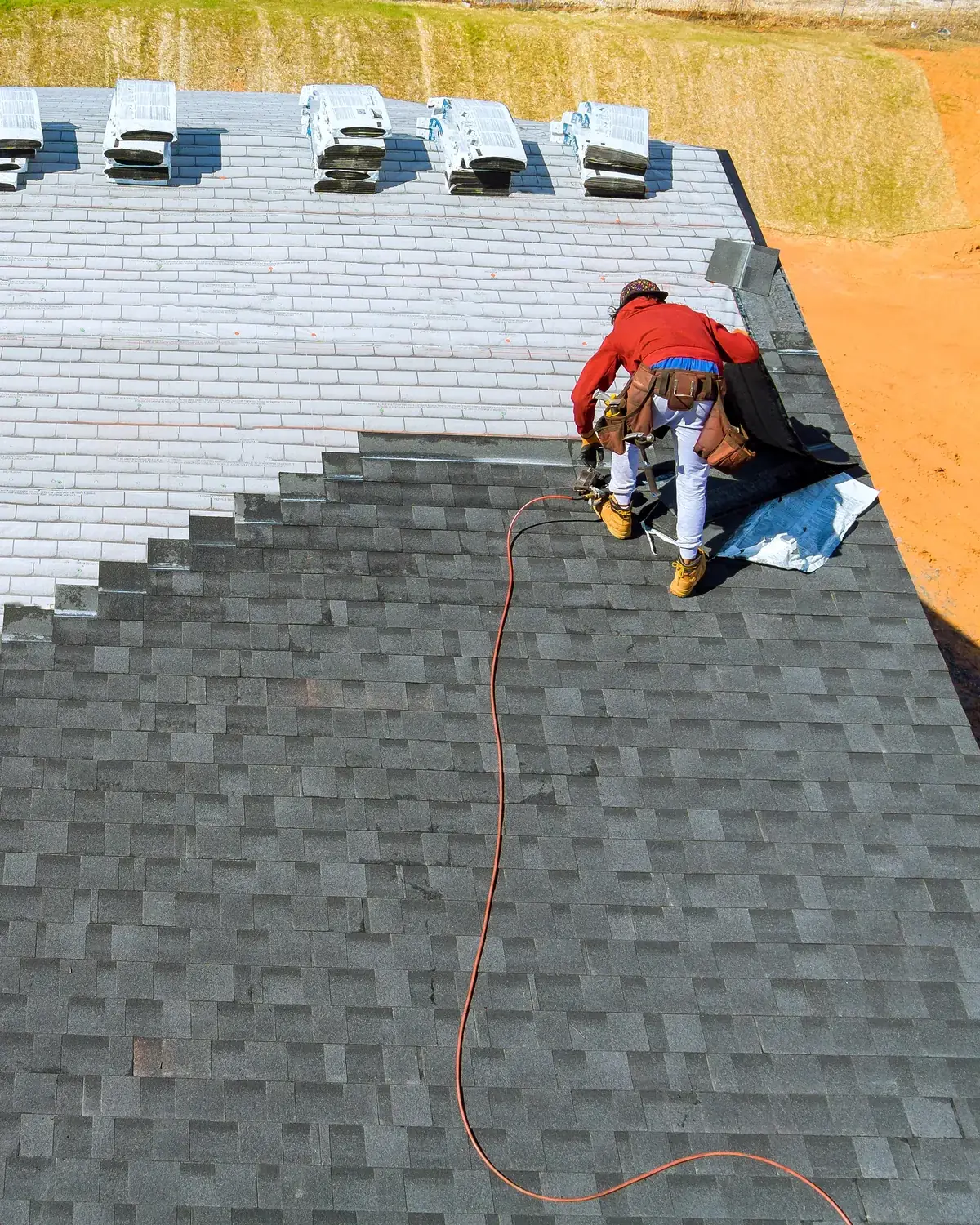
What’s included in our hail claim support
- Priority storm response and temporary weatherproofing
- Slope-by-slope photo documentation of every impact
- Storm dates matched to the NOAA Storm Events record
- Scope written in the line-item format adjusters work from
- Our estimator on the roof for the adjuster meeting
- Class 4 upgrade documentation for premium discounts
- Supplement handling when the first scope misses damage

How a Castle Pines hail damage claim actually works
NOAA logs hail by the nearest named place, and no station sits inside Castle Pines city limits. The record that supports your claim lives under Castle Rock, Highlands Ranch, Sedalia and Louviers, the stations that bracket this town. When Castle Rock logged 2.50 inch hail in June 2019, Castle Pines roofs were in the same weather. We match your damage to that record so the claim stands on evidence, not on an adjuster’s first impression.
Know your rights as a Colorado homeowner: state law gives you the right to rescind a roofing contract within 72 hours of signing when an insurance claim is involved, and it is illegal for any roofer to offer to waive or cover your deductible. Anyone offering to “eat the deductible” is offering you insurance fraud with your name on it. We do not play that game, and you should not either.
The June 2026 storms tracked through central Douglas County. Claim windows close; damage does not. If you have not had the roof looked at since, the inspection is free and the photo file is yours whether or not there is a claim in it.
What hail actually does to Castle Pines roofs
Inch-class hail bruises asphalt shingle without tearing it: the fiberglass mat fractures under the granules, the roof looks fine from the driveway, and two winters of freeze-thaw later the fractures become leaks, usually after the claim window for the storm that caused them has closed. Tile fails differently but not better; impacts crack tile at corners and edges, and cracked tile sheds water into the underlayment, which then quietly does the aging the tile was supposed to prevent. Metal takes cosmetic dents that may or may not be covered depending on your policy’s fine print. Three materials, three damage signatures, one conclusion: the inspection has to happen up close, slope by slope, within weeks of the storm, because none of this reads from the ground and all of it is time-stamped evidence while it is fresh.
The deductible math, before you call your carrier
Filing is arithmetic, not reflex. Colorado wind-hail deductibles now commonly run flat $2,500 to $10,000 or 1% to 5% of dwelling coverage, and on homes insured at Castle Pines values a percentage deductible is a five-figure number. That cuts both ways. If the damage is a few cracked tiles and a dented vent, the repair may price below your deductible, in which case filing buys you a claim-history entry and nothing else, and our report will say so. If slopes are totaled, the claim funds a code-compliant replacement minus that deductible, which beats any cash price in the market. The sequence that protects you: document first with a company you called, read your declarations page, then decide with both numbers on the table. We put the repair price and the deductible side by side in writing so the decision is yours and it is an informed one.
RCV, ACV and the depreciation check
Most Colorado homeowner policies pay hail claims on replacement cost value: the carrier first releases the actual cash value, the depreciated worth of your old roof, and holds back the recoverable depreciation until the work is completed and invoiced. That second check confuses more homeowners than any other part of the process, and sloppy paperwork is what delays it. Our close-out package, final invoice matched to the approved scope, closed permit, photo file, is built to release the depreciation cleanly. If your policy is ACV-only on roofs, an increasingly common cost-saving endorsement, the math changes substantially: the carrier pays only the depreciated value of a roof that may be fifteen years old, and we flag it the moment we read your declarations page rather than letting the second check surprise you by never arriving.
Supplements: when the first scope comes up short
The adjuster’s first estimate is written in a hurry after a storm that filled every carrier’s queue, and it routinely misses items the local rules make non-optional: full tear-off where overlays are prohibited, deck repairs that only show after tear-off, code-required underlayment and ice barrier, the use tax that applies inside city limits, and Village review realities on gate-side addresses. Those gaps get corrected through a supplement, an itemized request documenting each item, its requirement source and its cost. Done with receipts it is routine paperwork; done with adjectives it ping-pongs for months. Ours cite the code item and the line-item price, which is why they tend to clear review the first time. The homeowner’s job is simply to know the first check is rarely the final number, and to hire the contractor who documents rather than shrugs.
What the adjuster will look for on your roof
Knowing the test helps you read the report. Adjusters typically chalk a test square per slope and count qualifying strikes: bruises with granule displacement and a soft spot under thumb pressure on shingle, corner and edge cracks on tile, not just scuffs. They look for corroborating evidence in the soft metals, gutters, downspouts, vents and AC fins dent at sizes that bruise roofing, and they check collateral around the property: window screens, deck stain, fence caps. Then they date-match everything against the storm record, which is where our NOAA-bracketed documentation does its work, because no station sits inside Castle Pines city limits and the record has to be read through its neighbors. When our inspection file already contains all four layers, chalked squares, soft-metal photos, collateral, dated record, the adjuster meeting becomes a walk-through instead of a debate, and that is the entire reason we build it that way before you ever file.
Your first two weeks after a Castle Pines storm
Days one to three: photograph anything obvious from the ground, note the storm date and time, and check the soft metals around the house. Do not sign anything on the porch, no matter how friendly the clipboard; the 72-hour rescission right exists because people do. Week one: a documented professional inspection, free, slope by slope, from a company you called. If there is no claim-level damage, you now hold a dated clean-bill report that makes the next storm’s claim cleaner. Week two: if the damage warrants it, file with your carrier, share the report, and set the adjuster meeting, which we attend on the roof. No legitimate contractor needs a signed contract before that meeting happens, and no legitimate schedule requires you to decide faster than your policy’s claim window does. The sequence is boring on purpose; boring is what a clean claim looks like.
Choosing a roofer after a Castle Pines storm
Every corridor pulls a wave of canvassers up I-25, and the screen is simple. Verify licensing for your side of the line: a City of Castle Pines contractor license in town, and a contractor who can speak fluently about Douglas County permits and the architectural review for the Village; hesitation on either means they are learning this town on your roof. No deductible games, ever, the pitch that starts “basically a free roof” ends with your name on fraud. Insist on documentation you can hand to anyone: a real inspection report works for a second opinion from any competitor, while a verbal “you definitely have damage” works only for the person saying it. And pick someone reachable in month three, because the claim is not over when the crew leaves; depreciation release and supplements need a contractor who still answers the phone. The 72-hour rescission right exists for anyone who signed on the porch anyway; if that is you, use it in writing, today.
Your hail claim, step by step
Document the hail damage
Every slope photographed against the storm record.
File the claim with evidence
You file; we supply the documentation package.
Adjuster meeting on the roof
We walk the roof with your adjuster.
Permitted build & close-out
Permitted build, final inspection, complete folder.
More roofing services in Castle Pines
Think the last storm got you? Find out for free.
Claim-ready photo report · NOAA-matched dates · no pressure