Guides · Process & Maintenance
Roof Maintenance Schedule for Castle Pines Homes
Ponderosa pines and a 6,300-foot climate give Castle Pines roofs a maintenance load most of the Denver metro never sees. Here is the calendar we recommend, season by season.
August 2026 · 6 min read · Castle Pines Roofing Co.
Why ponderosa pine lots raise the roof maintenance load in Castle Pines
The trees set the schedule here. The neighborhoods west of I-25, Forest Park and Glen Oaks especially, were built into a mature ponderosa stand, and those pines shed needles all year with a heavy drop in late summer and fall. Needles collect where water concentrates: valleys, gutters, behind chimneys. A wet needle mat holds moisture against shingles for days after a storm passes, grinding at the granule surface and inviting moss in the spots that rarely see sun. It also makes a fine dam, so meltwater that should have run to the downspout finds a shingle edge instead.
Shade is the second problem. At roughly 6,368 feet, snow already leaves north-facing slopes slowly, and a tall pine over the roof slows the melt further. Snow that lingers cycles through freeze and thaw, and refreezing meltwater at a cold eave is exactly how ice dams get started. The shadiest, most heavily treed lots in the city are always the first ones we see them on. None of this means the trees have to go. It means the roof under them needs a schedule instead of an occasional glance.
A season-by-season roof maintenance calendar for Castle Pines homes
- Spring: inspect before hail season. Winter snow load, wind, and freeze-thaw do their damage quietly. Have the roof looked over in April or May for lifted shingles, popped fasteners, and flashing that moved over the winter, and fix what turns up. Hail season along the Front Range runs roughly May through August, and a sound roof takes a storm far better than one already carrying small failures.
- Summer: check after any hail day. If hail fell anywhere near your neighborhood, do a ground-level pass within the week. Dented gutters or downspouts, torn window screens, and granule piles at the splash blocks are all visible without a ladder. If the soft metal took hits, have the roof itself inspected and documented.
- Fall: clear needles and gutters before the first hard freeze. This is the one job that matters most on a pine lot. Valleys, gutters, and downspouts should go into winter clean, because a gutter packed with needles freezes into a solid block that backs meltwater under the shingle edge. Our gutter service handles the clearing along with repairs to hangers and pitch while we are up there.
- Winter: watch the eaves and the attic. Thick ice buildup or long icicle rows at the eaves are a sign meltwater is refreezing where it should be draining. Inside, check the attic on a cold morning for frost on nail tips or damp insulation, and make sure vents have not been blocked. Catching an ice dam early is the difference between a nuisance and a stained ceiling.
Roof maintenance you can do from the ground vs jobs for a roofer
Plenty of the calendar above is ground work. A binocular scan of each slope, a walk around the house after wind, checking that downspouts actually discharge water, and photographing anything that looks off costs nothing and catches most problems early. Clearing first-story gutters from a stable stepladder, with someone footing it, is reasonable for most homeowners.
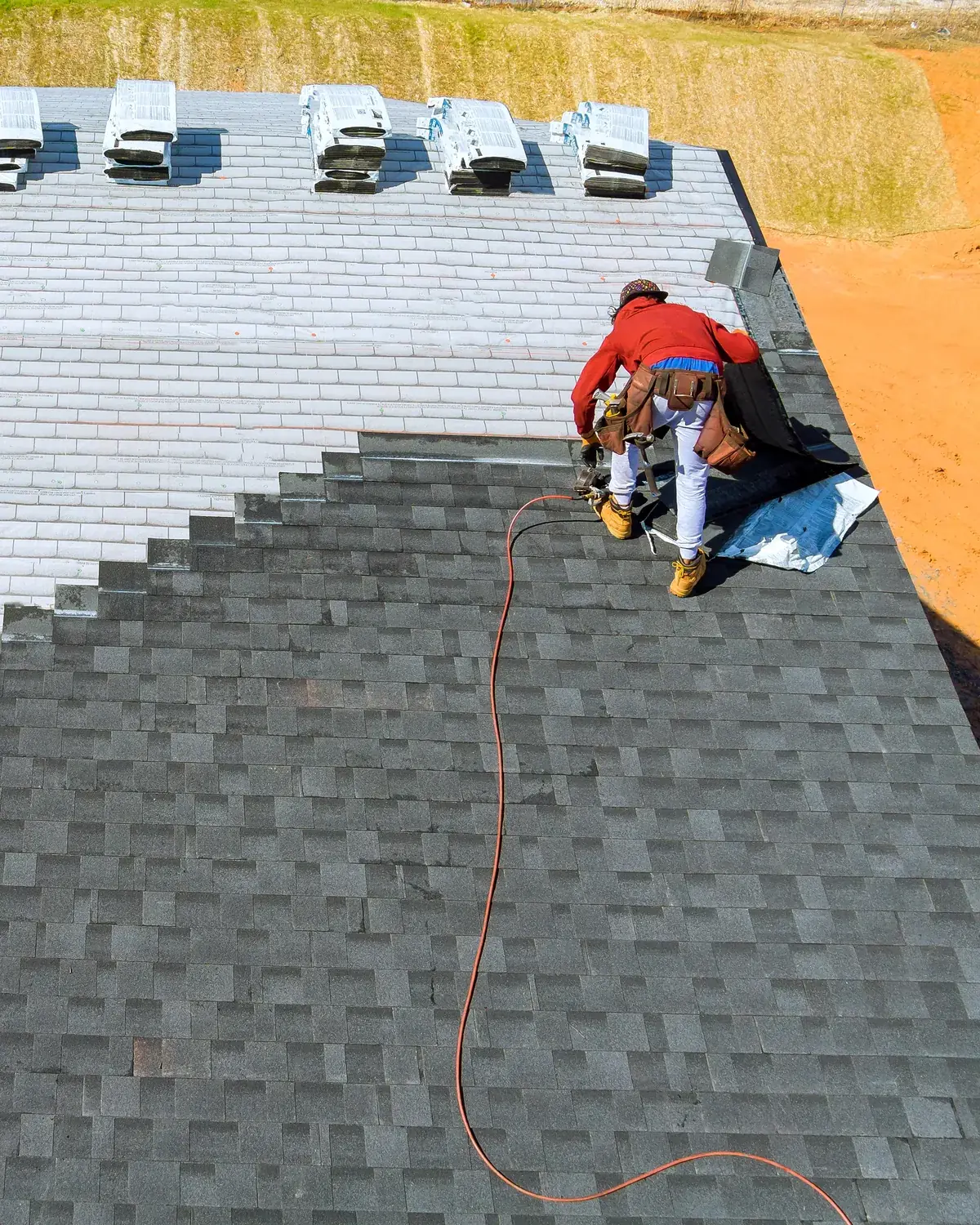
We will be straight about the rest: ladder falls put far more homeowners in the emergency room than roof leaks ever have, and two-story work on the steep pitches common in Castle Pines is not a Saturday project. Anything that involves walking the roof, clearing upper valleys, resealing penetrations, or reworking flashing belongs to someone with fall protection and the habit of being up there daily. The cost of a service visit is small against either outcome of doing it yourself badly.
How roof maintenance records help with warranties and insurance
Shingle manufacturers commonly expect a maintained roof, and a warranty claim gets complicated when neglect is arguable: gutters packed for years, needle mats left through winters, moss working under the courses. Insurance carriers reason the same way, since their job is separating long-term wear from sudden storm damage. Dated records flip that argument in your favor. Photos of clean valleys each fall and a written inspection report each spring establish a trajectory: this roof was cared for, was documented healthy, and now it is not. Two or three years of that file makes a claim conversation very short.
Small roof repairs now vs big roof repairs later
The economics of maintenance come down to one fact: water damage compounds quietly. A cracked pipe boot is a fast, inexpensive repair. Left alone for two seasons, it soaks the decking around the penetration, the decking rots, insulation gets wet, and a ceiling stain appears, and now the fix involves carpentry and drywall instead of a boot. A slipped shingle, a small flashing gap, one open nail head: same story on a slower clock. Most of the expensive repairs we get called for started life as something an annual visit would have caught for a fraction of the price. The schedule is not busywork. It is the cheapest insurance a Castle Pines roof can carry.
Questions Castle Pines homeowners ask
Once a year at minimum, ideally in spring before hail season, plus a check after any storm that drops hail near your home. On heavily treed Castle Pines lots we also recommend a fall visit to clear valleys and gutters before freeze-up, since needle buildup is what feeds winter ice problems.
Not directly, but the mats they form do. Wet needle mats hold moisture against shingles, wear away protective granules, encourage moss in shaded spots, and clog gutters and valleys so water backs up under shingle edges. On a ponderosa lot, keeping needles cleared is the single most valuable maintenance habit.
Removal and heat cable are bandages. The lasting fixes are a well-ventilated, well-insulated attic that keeps the roof deck cold and even, clean gutters going into winter, and ice and water shield membrane at the eaves when the roof is next replaced. Shaded north slopes on treed lots need the most attention.
More Castle Pines roofing guides
Want this checked on your own roof?
Free inspection · claim-ready photo report · no pressure