Guides · Permits & Code
OSB vs Plywood Roof Decking in Colorado
Decking is the wood everything else is nailed to, and nobody thinks about it until tear-off day. Here is how OSB and plywood actually compare, and how an honest bid prices replacement before the roof comes off.
August 2026 · 6 min read · Castle Pines Roofing Co.
What roof decking is and why nobody thinks about it until tear-off
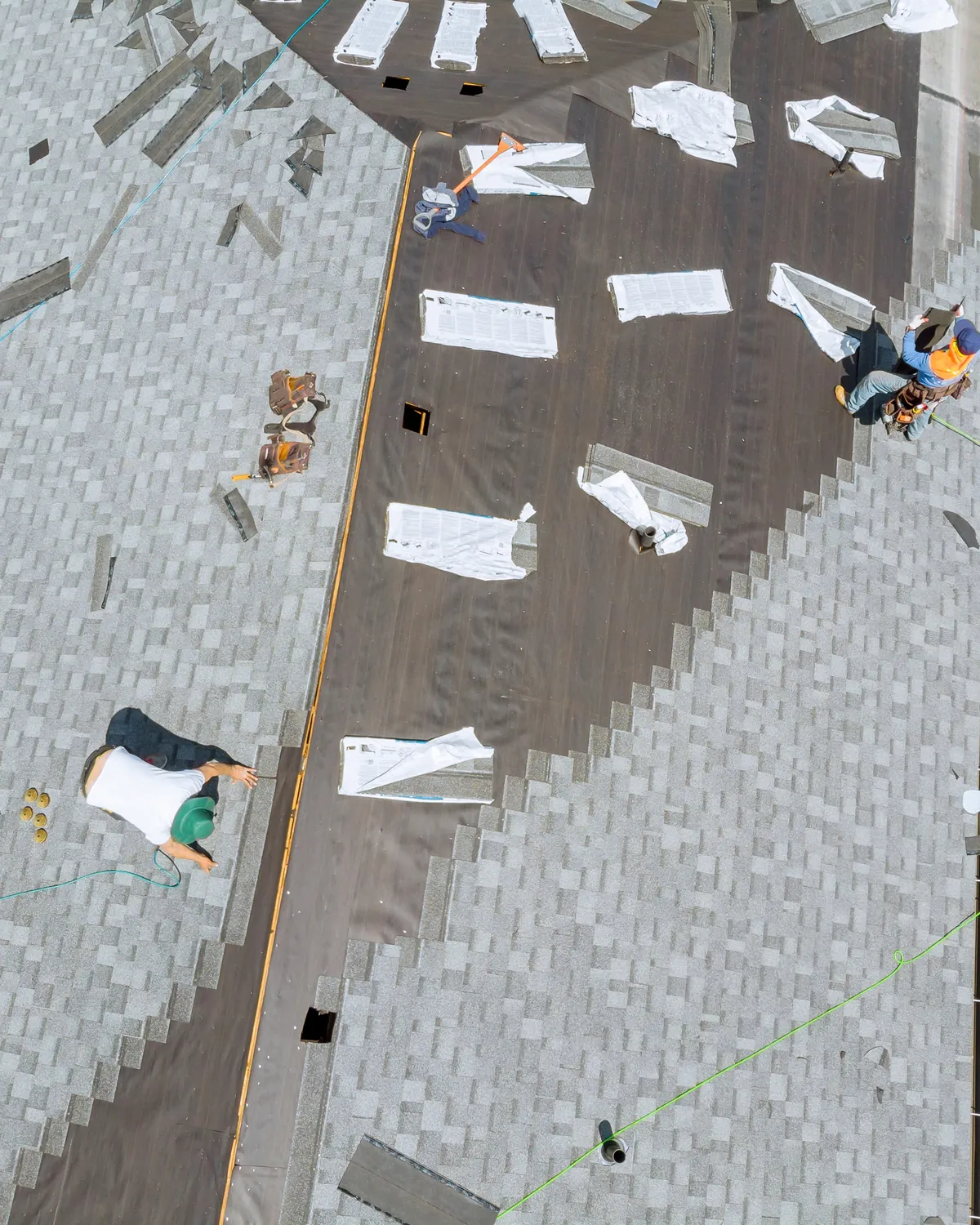
Roof decking, also called sheathing, is the layer of structural wood panels fastened over your rafters or trusses. Every nail in your roof, every shingle, every strip of underlayment ultimately depends on it. And it is completely invisible from both sides: shingles hide it from above, insulation hides most of it from below. Homeowners compare shingle brands and colors for weeks and never ask about the wood those shingles are nailed into, because until the old roof comes off, there is nothing to see.
That is why decking is the wildcard in every re-roof budget. The shingles are a known price. The wood underneath is a discovery.
OSB vs plywood roof decking, an honest comparison
Oriented strand board is made of wood strands glued and pressed into panels; plywood is thin veneers laminated in alternating grain directions. Both are legitimate structural decking when properly rated and installed, and most homes built here since the 1990s came with OSB because it costs meaningfully less per sheet. The honest differences show up around water and fasteners:
| Trait | OSB | Plywood |
|---|---|---|
| Cost | Lower per sheet | Typically higher |
| Moisture behavior | Edges swell when soaked and rarely flatten back | Dries flatter after wetting, more forgiving |
| Fastener holding | Good when dry, weakens where swollen | Generally stronger nail hold |
| Sag over wide spans | More prone in thin sheets | Stiffer at equal thickness |
In Colorado's dry climate, OSB that stays dry performs fine for decades. The trouble starts where a slow leak, an ice dam, or attic condensation keeps one area damp. OSB punishes repeated wetting harder than plywood does.
What tear-off reveals on Castle Pines North homes built 1985 to 2010
Most of Castle Pines North went up between 1985 and 2010, which means original decking on many homes is now approaching 20 to 40 years old. Age alone does not condemn it. Plenty of sheets come through tear-off solid and stay right where they are. But some construction eras leaned on thinner panels than what we would choose today, and decades of attic heat, freeze-thaw cycling, and the occasional past leak leave their marks. On heavily treed lots in Forest Park and along Monarch Blvd, pine-shaded slopes that hold snow are where we most often find the soft spots.
None of this is visible from the driveway, and only some of it shows from inside the attic. The roof tells you the truth on tear-off day, which is exactly why the paperwork has to be ready for that truth in advance.
The per-sheet decking price every honest roofing bid puts in writing
Ask for the number before tear-off, not after. A straight bid states a per-sheet price for decking replacement, in writing, before anyone touches your roof. Then, if eight sheets turn up soft, you already know what eight sheets cost, and the conversation is arithmetic instead of a standoff. The ugly version is the contractor who discovers "major decking problems" mid-job, when your roof is open to the sky and your negotiating position is gone. A pre-priced line item removes that move entirely. It is one of the questions we tell every homeowner to ask when comparing bids, right alongside the totals in our guide to roof replacement cost in Castle Pines.
Douglas County's full tear-off rule means Village decking always gets seen
For Village at Castle Pines homes, permits run through the Douglas County Building Division, and the county requires full tear-off to the deck on re-roofs. No overlays, no second layer nailed over the first. That rule exists precisely so the decking gets looked at, and it means every Village re-roof includes a full view of the wood before anything new goes down. City jobs get the same treatment on our crews, and the deck condition is part of what gets reviewed during roofing permit inspections.
Moisture stains, delamination, and sag, the condition calls we make on the roof
Once the deck is bare, three things drive our replace-or-keep calls. Dark moisture staining marks where water has been living, and stained wood that is still hard can often stay while stained wood that gives underfoot cannot. Delamination, where plywood veneers separate or OSB strands flake apart at the surface, means the panel has lost the structure a nail needs to bite. And visible sag between rafters tells you a sheet has quit carrying load. We photograph every call we make, keep or replace, and the pictures go in your file. Want to know what is probably under your shingles before tear-off day? Call (720) 924-4814 for a free inspection and we will give you our best read, in writing.
Questions Castle Pines homeowners ask
Neither is wrong. Properly rated OSB is the budget-friendly standard on most modern homes and performs well when it stays dry, while plywood holds nails somewhat better and recovers from wetting more gracefully. Matching the existing deck thickness and fixing the moisture source matters more than the panel type.
Denver-metro roofers commonly quote decking replacement in the range of $75 to $150 per sheet installed, though prices vary with material and access. What matters most is getting your roofer's per-sheet number in writing before tear-off begins, so surprise wood never becomes a mid-job negotiation.
Yes, decking is replaced sheet by sheet, and a typical re-roof swaps only the panels that are soft, delaminated, or sagging. Isolated repairs can also include a sheet or two. Replacing every sheet is rare and usually signals long-term moisture problems that need their own fix.
Want this checked on your own roof?
Free inspection · claim-ready photo report · no pressure